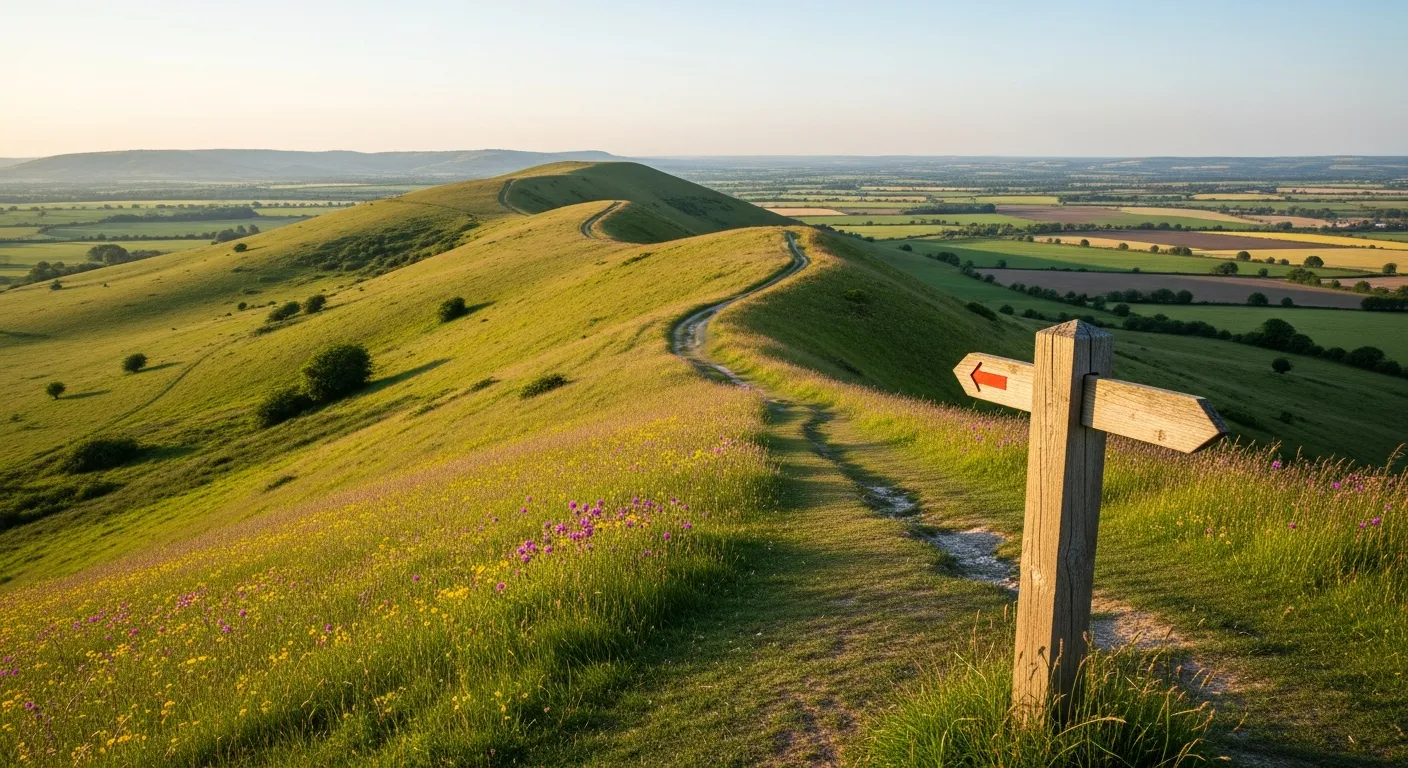
The South Downs National Park runs right through West Sussex, offering some of England's finest walking. But not all routes suit little legs. Here are our favourite family walks, from short, easy routes for little legs to longer, steeper ones for confident walkers, all rewarding enough for grown-ups.
Quick Comparison
| Walk | Location | Distance | Difficulty | Pushchairs (official description) |
|---|---|---|---|---|
| Cissbury Ring | Worthing | 2.2 miles (NT history trail) | Moderate (steep) | Not stated (uneven terrain, steep slopes, steps and kissing gates, says the National Trust) |
| Arundel Riverside (Swanbourne Lake and River Arun circular) | Arundel | 3 to 4 miles | Moderate (fairly flat, some small inclines) | Not stated (steps at Swanbourne footbridge; grassy paths uneven in places) |
| Devil's Dyke | Brighton | 3 miles and up | Not stated | Grassy, uneven paths that can be muddy (National Trust) |
| Kingley Vale | Chichester | Varies by route | Steep in places | Some areas steep and uneven |
| Amberley circular (South Downs National Park) | Amberley | 2 to 3 miles | Easy, some stiles | Some stiles |
| Stansted Forest | Rowlands Castle | Choose your route (over 20 miles of paths) | Not stated | Not stated |
| Slindon Estate | Slindon, near Arundel | 1.8 miles | Easy | Suitable, with a stile on one stage (National Trust) |
| Chanctonbury Ring | Steyning | 7-mile circular from Steyning | Steep ascent in places | Not stated |
The Walks
Cissbury Ring, near Worthing
The largest hill fort in Sussex, with a history going back over 5,000 years and 360-degree views. There is no National Trust parking: from the nearest car park it is about a 20-minute walk uphill, with kissing gates and stiles. Expect uneven terrain, steep slopes, steps and kissing gates on the National Trust's history and nature trail. There are no toilets on site: the National Trust says the nearest public toilets are in Findon Valley, near Findon library.
Key Information
Top tip: Go at sunset for magical views. Bring a kite as it is always windy up top.
Arundel Riverside
A riverside walk along the River Arun. The South Downs National Park Authority's circular walk around Swanbourne Lake and back along the River Arun is 3 to 4 miles and fairly flat, with some small inclines; allow 1 to 2 hours. The riverside path is reached by steps down to Swanbourne footbridge and the route uses grassy paths that are uneven in places, so it is not ideal with a buggy.
Key Information
Top tip: Combine with the wetland centre, or with Arundel Castle once it reopens on Thursday 25 March 2027.
Devil's Dyke, near Brighton
Famous beauty spot with a spectacular dry valley. Multiple routes start from the National Trust car park at the top, and the dry valley is just five minutes from it. The National Trust says the grassy paths near the car park and the woodland routes are naturally uneven and can be muddy after wet weather. Watch the hang gliders launch from the ridge for free entertainment.
Key Information
Top tip: The pub does good food but gets packed on sunny weekends. The hang gliders are mesmerising.
Kingley Vale, near Chichester
Ancient yew forest, one of the finest in western Europe. Magical, twisted trees that kids love exploring. The reserve has 14 scheduled ancient monuments; some paths are steep and uneven.
Key Information
Top tip: The yew forest genuinely feels magical. Bring a camera. Best avoided after heavy rain as it gets slippery.
Amberley circular
The South Downs National Park Authority's Amberley circular walk starts from the pretty village of Amberley. It is 2 to 3 miles, rated easy, with some stiles, and some sections can be very boggy in winter; allow 1 to 2 hours. The village has a great tea room and beautiful thatched cottages.
Key Information
Top tip: Amberley station is on the Arun Valley line, so you can arrive by train. The Bridge Inn at Houghton Bridge serves home-cooked lunches from Wednesday to Sunday. It is closed on Mondays and Tuesdays except bank holidays, and closed on the Wednesday after a bank holiday Monday.
Stansted Forest, near Rowlands Castle
Ancient woodland with waymarked trails. There are over 20 miles of paths, so you can choose a short loop. Mixed woodland of oak, beech and sweet chestnut, with conifers and old yews. Perfect for kids who like exploring.
Key Information
Top tip: Dogs are welcome but must be kept under control to protect ground-nesting birds and deer, and please respect the signposted conservation and limited-access areas, which vary with the seasons.
Slindon Estate, near Arundel
National Trust estate with easy woodland walks and views to the sea. The National Trust's circular walk from Park Lane car park through Slindon village is 1.8 miles and takes about an hour.
Key Information
Top tip: The Forge cafe in the village is lovely.
Chanctonbury Ring, near Steyning
Iconic clump of trees on a hilltop with Iron Age hillfort remains. A steep climb in places. Atmospheric and great for older kids who like legends. The story goes that if you run around the ring seven times at midnight, the devil appears.
Key Information
Top tip: Save the devil legend for older kids. The views from the top are worth the climb on a clear day.
Spring (April to May) is the best time for bluebells and wildflowers. Early summer offers long days. Autumn brings spectacular colours. Always wear proper shoes and check the weather before heading out.